
Rental income after costs
Rent creates the income. Finance, management, maintenance, insurance and periods without a tenant determine how much remains.
FOR INVESTORS
Use our Rushden knowledge, property experience and local network—from finding a deal to looking after the finished asset.
These services help you buy and manage your own property. The case study is a property example, not a return offered on a loan to JDG. Read our important information.
A property opportunity and the information to assess it.
From £2,500 including VAT
Explore sourcing ↓A hands-off project, managed from purchase through renovation to refinancing.
Explore project support ↓Support through the project and care of the rental asset.
Explore management ↓INVESTOR OPTION 01
A clear starting point for your portfolio.
We look for properties that fit your budget and plans, using our local knowledge and contacts to identify opportunities.
Sourcing fees start from £2,500 including VAT.
We explain the scope of our work and agree the sourcing fee in writing before you instruct us. You choose whether to proceed after your own checks and professional advice.
INVESTOR OPTION 02
Your project. Managed by us.
We manage the full property project from purchase through renovation to refinancing, so you can take a hands-off approach to the day-to-day work. You make the key decisions and deal directly with your chosen broker and solicitor; we coordinate the project around them.
Our local network runs from plasterers and plumbers to other specialist trades, with connections to council-led rental schemes where suitable. If you need a broker or solicitor, we can recommend contacts for you to consider.
You approve spending and give your own legal and finance instructions. Your broker advises on the mortgage; the lender decides the valuation and whether to lend.
See how our recent project worked ↓RECENT PROJECT
A closer look at one investment,
from purchase to letting.
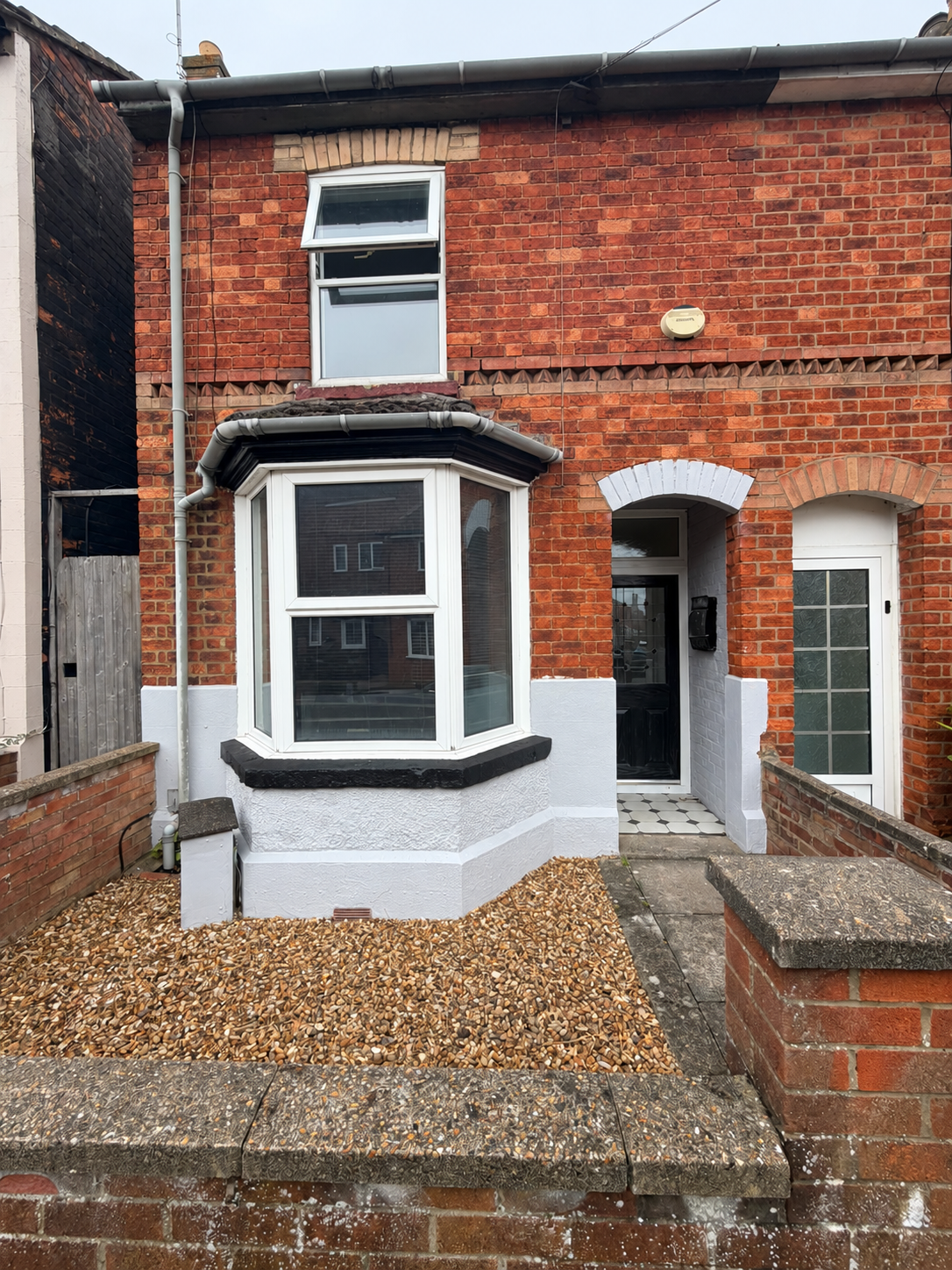
An investment is about the relationship between what you spend, the asset you create and the income it produces. Our latest Rushden project brings those figures together in one case study.
THE INVESTMENT APPROACH
Rent creates the income. Finance, management, maintenance, insurance and periods without a tenant determine how much remains.
Compare the completed property's supported value with the full cost of buying and renovating it. Any increase in value remains unrealised until a sale; refinancing creates borrowing, rather than profit.
The price paid and the scope of works must make sense against local sale and rental comparisons. The complete deal breakdown shows how these fit together.
Purchased 3 June 2026 · Tenancy started 1 October 2026 · Aldermore Bank formal valuation: £185,000, October 2026.
The £25,000 programme addressed the building’s condition as well as the rooms tenants use every day. Roof repairs and replacement of the suspended floor formed the core repair works. A new kitchen and bathroom updated the main facilities, while full redecoration, new carpets and laminate flooring gave the interiors a consistent finish. Outside, the garden was fully landscaped to complete the home for letting.
The 4.5 months is the bridge period, not the period over which 17.42% was earned. This is an annualised illustration of rental cash flow after refinancing, based on 12 months of rent and the stated costs. It is before tax, includes no separate void allowance or unlisted costs, and is not guaranteed. Mortgage borrowing is not income or profit. Figures supplied by JDG Property Ltd; formal valuation by Aldermore Bank in October 2026.
INVESTOR OPTION 03
Look beyond the renovation.
Continue with us after the project. We help bring the property to the rental market and look after the ongoing tenancy and maintenance.
We agree the management service and fee with you, so you know who will handle tenant contact, repairs and the day-to-day care of the property.
OUR MANAGED PORTFOLIO
We manage eight properties in Rushden, combining local people and trades with AI-assisted administration, digital records and regular inspections. Our focus is a well-cared-for home and a clear record of what needs doing.
We embrace AI to help organise information, draft communications and reduce repetitive administration. Our team reviews the work and makes the decisions, keeping the focus on the property and the people who live there.
We schedule inspections at three- or six-month intervals, as agreed for the property. Digital checklists, photographs and action records help us identify maintenance needs and track follow-up work.
We look ahead, identify maintenance needs early and arrange preventative work through our local trades. Caring for the building protects its condition, long-term value and ability to generate rental income, throughout this tenancy and those that follow.
PREVENTION AS WELL AS REPAIR
Water escaping from pipes and appliances can damage floors, ceilings and possessions, disrupt a tenancy and leave a home needing extensive repairs. We are planning to introduce leak sensors and remotely controlled water shut-off valves in suitable properties, alongside inspections and prompt maintenance.
A connected sensor can raise an alert; a compatible valve can allow us to isolate the incoming mains supply remotely. Systems configured for automatic shut-off can also act without waiting for someone to attend. The aim is to limit how long water continues to flow while a repair is arranged.
Sensor → alert → remote shut-off → plumber attends
Illustration of our planned approach. A compatible system can also close the valve automatically when configured to do so. Installation depends on suitability, connectivity and testing; shutting the mains does not remove water already stored in the system.
UK escape-of-water insurance claims in 2024, across homes and businesses; almost three quarters came from household leaks.
Ofwat · August 2026Average escape-of-water home claim reported by Aviva in July 2026, drawing on its own home-claims data.
Aviva · July 2026Zurich’s guidance cites approximately 238,000 UK escape-of-water claims in 2020. This is a historical count of claims—not a count of homes flooded because repairs were delayed. The sources do not establish how many incidents were caused by slow attendance.
Zurich also reports that suppliers it consulted estimated detection and suppression systems could reduce claim severity by up to 80% in some properties. That is a supplier-reported potential reduction in the scale of losses, not an independently established saving for every landlord, or a result achieved by JDG.
Early alerts and shut-off can limit an ongoing mains-fed leak. They cannot prevent every leak or stop all water already stored in a system, and they do not protect against every cause of flooding. We will assess suitability, resident arrangements, connectivity and ongoing testing before installation.
Zurich: Managing Escape of Water Risk in Residential Premises, pages 4 and 13. These figures describe different datasets and periods; they are not JDG portfolio results. Sources checked 18 November 2026.
LET’S TALK PROPERTY
Tell us your budget, your plans and how involved you would like to be.
Opens your email app. Include your number if you would like a call.